
Early Intervention Paperwork: Writing IFSP Outcomes Families Recognize

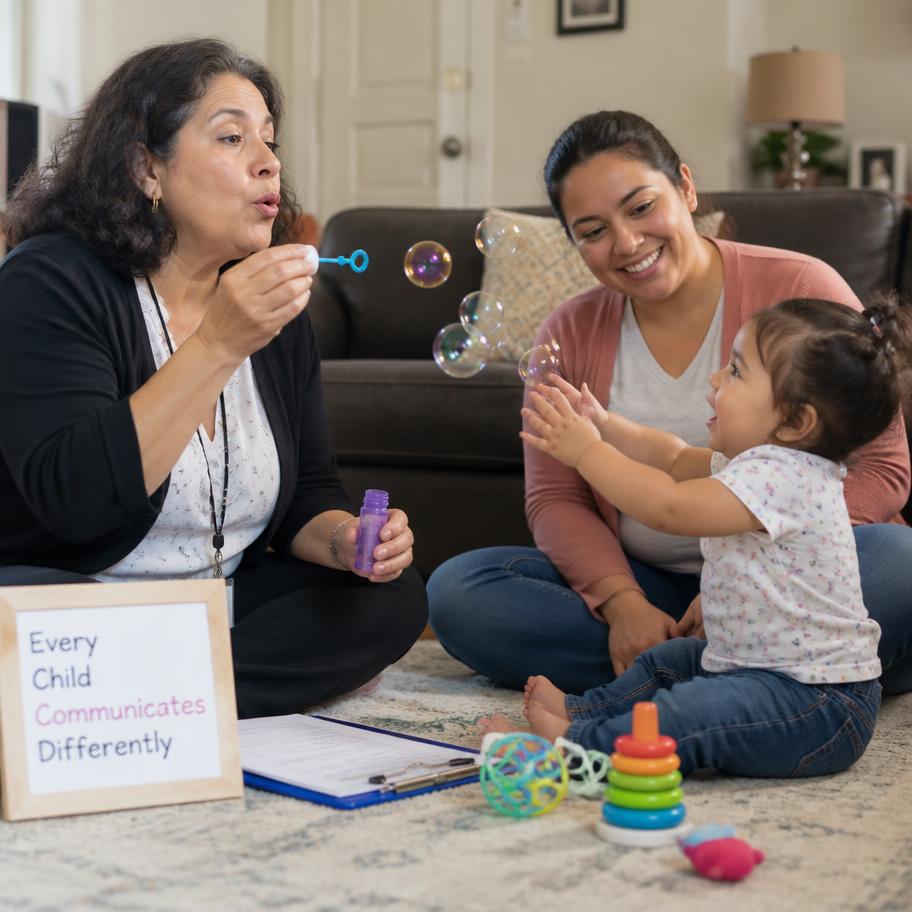
Early intervention documentation has a problem no other setting has: the plan belongs to the family, not to you. An IFSP outcome written in clinical shorthand may satisfy your agency and still be useless to the person who has to carry it out between visits.
The test I use: could this caregiver read the outcome out loud and know what Tuesday morning looks like?
What makes an outcome routines-based
Part C is explicit that services are family-centered and delivered in natural environments. A routines-based outcome names the routine, the participation the family wants, and how everyone will know it happened.
- Anchored to a real routine — snack, bath, car rides, grocery trips, bedtime books.
- Written in the family's words — "so she can tell us what she wants at snack" beats "to increase requesting."
- Measurable without a clipboard — a criterion a caregiver can notice, across days, without a data sheet.
- Coaching-shaped — the visit note records what the caregiver tried, not only what you demonstrated.
Writing the visit note in the car
Home visits generate the least tidy data in the profession: gesture counts on a napkin, a word approximation you'll misremember by 4pm, a parent question that changes the plan. Capture it in four lines before you drive away.
- Routine addressed — which part of the day you worked inside.
- What the child did — observable behavior, counts or approximations where you have them.
- What the caregiver practiced — the strategy they tried and how it went with your coaching faded.
- Plan until next visit — one thing, stated the way the family said it back to you.
Where SLP Draft fits
Set your work setting to early intervention and the app stops talking about IEPs: outcomes instead of goals, IFSP structure instead of eligibility statements, and family-facing wording in the drafted language.
- Routines-based outcome drafting — enter the routine and the concern; get outcome wording you can edit with the family in the room.
- Visit notes that accumulate — each home visit rolls into the periodic review instead of being rewritten from memory.
- Language samples that count — early utterances are counted deterministically, so MLU in the report is a number you verified. See the language sample guide.
- Works on a phone — write the note in the driveway, finish it later.
Sources
- • IDEA Part C — 34 CFR §303.344 IFSP content, including measurable outcomes.
- • IDEA Part C — 34 CFR §303.13 early intervention services in natural environments.
- • ASHA Practice Portal — Early Intervention.
Finish the note before the next driveway
Log the visit, keep the family's words, and let the periodic review assemble from what you already wrote.
No credit card required.